[#item_full_content] [[{“value”:”I was a big fan of Agents of S.H.I.E.L.D. back when the should-be flagship Marvel TV series first premiered, and will die on the hill that it eventually became Peak Marvel by the time the series wrapped up after seven ambitious, action-packed seasons.
If you need a refresher, the series premiered in primetime on ABC and was essentially designed to bring the blockbuster success of the MCU from the big screen to the small screen. The first season was timed to run right in the middle of the opening of Captain America: Civil War, with the film’s big HYDRA twist completely flipping the script on the show’s status quo.
Marvel nerd? Me, too! Subscribe to Static on the TV for free and let’s geek out together.
Subscribe
At its core, the show followed an elite S.H.I.E.L.D. team led by Clark Gregg’s Agent Coulson (who famously died in The Avengers, but is brought back to life to lead this secret team in the series), so with S.H.I.E.L.D. basically being dismantled due to HYDRA’s infiltration in the film, Coulson’s squad became more of a scrappy group of heroes on the run for the rest of the series.
But that big HYDRA twist in Civil War also set up the perfect opportunity to show just how deep HYDRA had made its way into the organization — including into Coulson’s own, hand-picked crew.
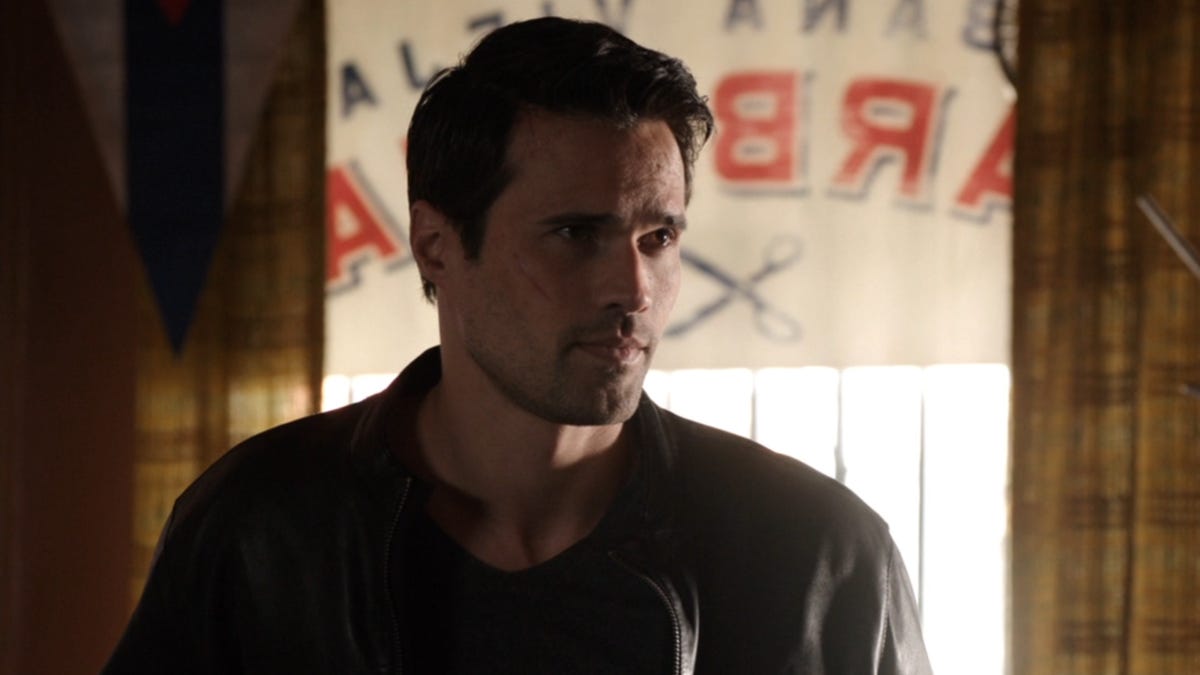
Grant Ward: Agent of S.H.I.E.L.D. HYDRA
Coulson’s team is an eclectic mix of agents, including an elite field agent looking to overcome her demons (Ming-Na Wen’s Melinda May), young tech geniuses FitzSimmons (Iain De Caestecker and Elizabeth Henstridge), an outsider hacker new recruit played by Chloe Bennet (who turns out to be the Inhuman hero Daisy, aka Quake), and the prototypical handsome, All American hero agent Grant Ward (played by Brett Dalton).
Ward is a core member of the cast and team for the first half of Season 1, saving the day multiple times and becoming friends with the rest of the team. Then, the events of Civil War take place, as we see S.H.I.E.L.D. torn apart from the inside as HYDRA makes its move. Coulson’s team fights to hold their own and defend S.H.I.E.L.D., and seemingly win the battle, sending Ward off with a contingent of agents once his former mentor (a HYDRA agent played by the late, great Bill Paxton) is captured.
Then, the big reveal leaves our jaws on the floor: Ward pulls his gun and executes the S.H.I.E.L.D. agents in cold blood. He’s been a HYDRA sleeper agent all along.
I’ve been rewatching S.H.I.E.L.D. off and on in recent weeks simply for the Marvel nostalgia (I recapped the series during its original run back when I was at SYFY WIRE, and interviewed the creators several times along the way). I hadn’t watched it since it first aired, and man, this series absolutely still holds up.
Brett Dalton stuck around longer than I remembered
The rewatch has also served as a reminder of just how long Brett Dalton stuck around in this ensemble as an antagonist. I remembered he faced off against the team, but had forgotten he was there for over half of the show’s run, long after that Season 1 reveal. He was a lingering antagonist pretty much entirely through the first three seasons, then popped up in the virtual world of the Framework (it’s a whole thing) in the show’s fourth season.
But the twist of having a core member of the main cast turn out to be one of the most cold-blooded villains in the series’ history? A bold move, and one of the coolest shocks in Marvel lore (across TV and movies). This show was pitched as a big, broad Marvel action show. So to have one of the main characters, a likable hero, turn out to be a turncoat was absolutely brilliant.
That bravery extended through the run of the series, with the show truly coming into its own in Season 2, as Coulson’s team dealt with the fallout and aftermath of HYDRA. By Season 3 we had an ambitious storyline featuring a mysterious monolith that leads to an alien world, Season 4 dealt with a virtual world and brought in the Ghost Rider, and the final seasons tackled time travel and all sorts of truly sci-fi twists and tropes all the way to a truly thrilling conclusion.
There’s been much debate over whether the series is truly canon (my take: probably, maybe, but not in any way Marvel intends to ever acknowledge), but it honestly doesn’t matter. It’s a smart, brave corner of the MCU that ran for a mind-boggling 136 episodes.
So if you’re going crazy waiting for Marvel to drop VisionQuest or a new season of Daredevil: Born Again? Dive back into S.H.I.E.L.D. You won’t regret it.
Thanks for reading Static on the TV! Subscribe for free to receive new posts and support my work.
Subscribe”}]]  Read More
Why the Grant Ward HYDRA reveal in Agents of S.H.I.E.L.D. is still one of Marvel’s best twists

ByMarvelComicBooks.com
September 4, 2026