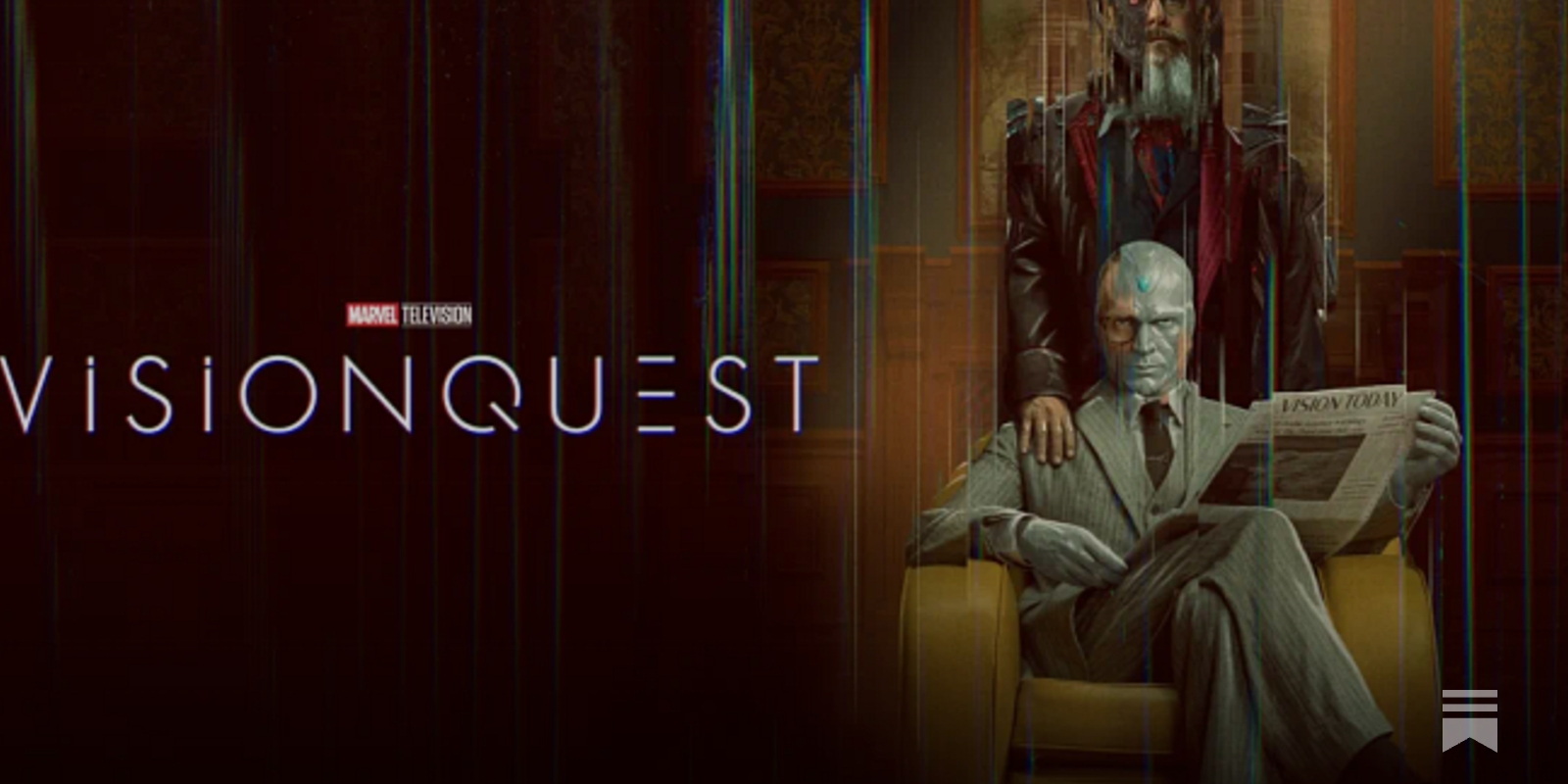
[#item_full_content] [[{“value”:”Pity the poor superhero/comics nerd who must explain VisionQuest to regular TV viewers.
That’s the thought which was rattling in my head this morning, when I went on NPR/WBUR’s Here and Now show to talk up the latest Marvel Television extravaganza on Disney+ — a trippy, mind-bending, Easter egg-filled, fan-courting limited series that is almost impossible to sum up in a single sentence.
This Substack is reader-supported. To receive new posts and support my work, consider becoming a free or paid subscriber.
Subscribe
In the same way HBO’s Lanterns translates a sophisticated superhero story for audiences who might not know or care anything about the world of Superman and Batman, VisionQuest is the exact opposite. This is a story which leans heavily into storylines and big moments referencing past Marvel movies and TV shows.
At a time when pop culture is brimming with superhero fatigue, VisionQuest dares viewers to balk at inside references to the way Wanda Maximoff died at the end of the second Doctor Strange movie or the fate of the sons she created for herself during Marvel’s very first limited series for Disney+, Wanda Vision.
Indeed, VisionQuest is the third series in a trilogy of Disney+ shows centered on Wanda, Vision, magic and loss, including WandaVision and Agatha All Along. I think viewers can take in VisionQuest without knowing lots of other Marvel lore, but it would be a different experience, with loads of inside jokes, cheeky references and call back moments failing to land.
(There is, for example, a dramatic moment built around finding the staff that a disciple of Thanos used to try prying the mind stone from Vision’s head in the I_nfinity War_ movie. See? Even that sentence sounds like the beginning of a gigantic fan statement/question at a ComicCon Q&A session.)
Still, as a comic book fan, I have come to hate the reflexive pushback against superhero stories which dare to build on past storytelling – pretty much the same way actual comic books do. The fact is, there are a few different ways to tell stories in this genre, and I ain’t mad at a show which wraps up a trilogy of series by referencing a great many events that have come before.
The essence of the comic book genre centers on building out a fictional world that constantly refers back to itself – so there should be a few superhero TV shows with enough stones to do the same.
That said, when I listed all the TV shows and films viewers would have to know to get most of the references in VisionQuest, it was a daunting roster: Iron Man, Avengers: Age of Ultron, Avengers: Infinity War, Captain America: Civil War, Doctor Strange: The Multiverse of Madness, Spider Man: Far From Home, Wanda Vision and Agatha All Along, to name a few.
VisionQuest’s setup is compelling. First, the crazy, comic book-style backstory: Vision, a synthetic man created in the second Avengers movie, was killed by bad guy Thanos in the Infinity War film and resurrected by his great love Wanda in WandaVision. Government bad guys took the artificial body Thanos left behind and rebuilt a new, white Vision, separate from Wanda’s conjuring, and that character flew off into the world at the end of WandaVision, unsure of what he was.
As VisionQuest opens, that Vision is hiding in Scotland, pretending to be human and struggling to understand humanity the way the original Vision seemed to do so easily. He sees that original version as the ultimate rendering, because he was the most human – like Pinoccio and The Tin Man before him, all this new Vision wants is to feel like a real person.
The series vaults between action in the real world and a simulated reality inside Vision’s computerized head, where human-looking avatars for all the different AI programs created in Marvel movies – including J.A.R.V.I.S., F.R.I.D.A.Y., E.D.I.T.H. and whatever powered the robot helpers in the first Iron Man film – gather in his mind to help him sort out his shit.
Of course, Vision also saved a shard of his greatest enemy, the killer android Ultron, given a seductive and playful life by James Spader. Spader-as-Ultron sidles through Vision’s mind palace like a charismatic snake – moving through a sea of guileless, earnest AI programs like a crotchety uncle, dropping bitter bon mots until the opportunity arises to do much more.
There is so much more to this series that that setup. But to write more would risk committing even more bonkers comic book backstory to print, and I would like to avoid that turn off at all costs. But I will say that Todd Stashwick, who turned heads in a pivotal role on Star Trek: Picard, turns heads again as an ascerbic-yet-dedicated bounty hunter called The Paladin.
And Vision’s struggle to figure out if he is a continuation of the original or something new – standing next to a murderous Ultron who would much rather wipe humanity off the Earth than serve it – mirrors all the discussions we’re having in real life about artificial intelligence and its vacillations between killing humanity by trying too hard to please it and just killing us.
I’ve always felt Vision was an underutilized character in the Marvel universe and that actor Paul Bettany – who has just the right mix of head-turning good looks and otherworldly eccentricity to perfectly inhabit Vision – was similarly overlooked by Hollywood. So I really enjoyed wading through the often surreal, sometimes incoherent jumble of storylines, references, ideas and passions that power VisionQuest.
It’s not for everyone. Not even for every comic book/superhero fan. But for those of us who aren’t scared off by lore and love powerhouse actors selling sometimes ridiculous scenarios, VisionQuest might be the perfect diversion between the latest Spider-Man movie and the new Avengers blockbuster.
The Diplomat likely appeals to a much different crowd than VisionQuest — cloaking its stories of functionally dysfunctional relationships among high powered politicos and staffers with world-shaking political stories that feel authentic but are somehow light years removed from the actual toxically bizarro stuff filling the real world’s politicla cycle.
So viewers can pretend they’re showing up for the _West Wing-_style geopolitical storylines, but stay to see if Keri Russell’s tomboyish ambassador to Britain, Kate Wyler, can even learn to live with the brilliant husband/former ambassador/current vice president she loves to hate, Rufus Sewell’s Hal Wyler.
As the fourth season unfolds, we get to see more of Allison Janney’s Grace Penn, a vice president Kate was supposed to replace, but who wound up becoming president when the POTUS who had planned to sideline her had an untimely passing. (RIP Michael McKean — yet another awesome-yet-underappreciated character role you nailed to the wall). Janney’s Penn is married to a character played by another West Wing alum, Bradley Whitford — he is much less well-used in a role which seems pretty thankless. Good as it is to see Janney eat up every scene as a hard-charging female president, it is a little perplexing to see Whitford cooling his heels in a role which seems al ittle beneath his talents.
I rank The Diplomat with Apple TV’s Slow Horses as series which are reliably brilliant year after year and yet somehow never get the acclaim they deserve. So, if the superheroics and demands for knowledge of Marvel lore is too much to make you fall for VisionQuest, then please check out the fourth season of The Diplomat, which will make you believe it might still be possible to have a U.S. government run by smart, capable people whose biggest problem is believing only they can figure out exactly what is best for the future of the country — and the entire world.
This Substack is reader-supported. To receive new posts and support my work, consider becoming a free or paid subscriber.
Subscribe”}]] 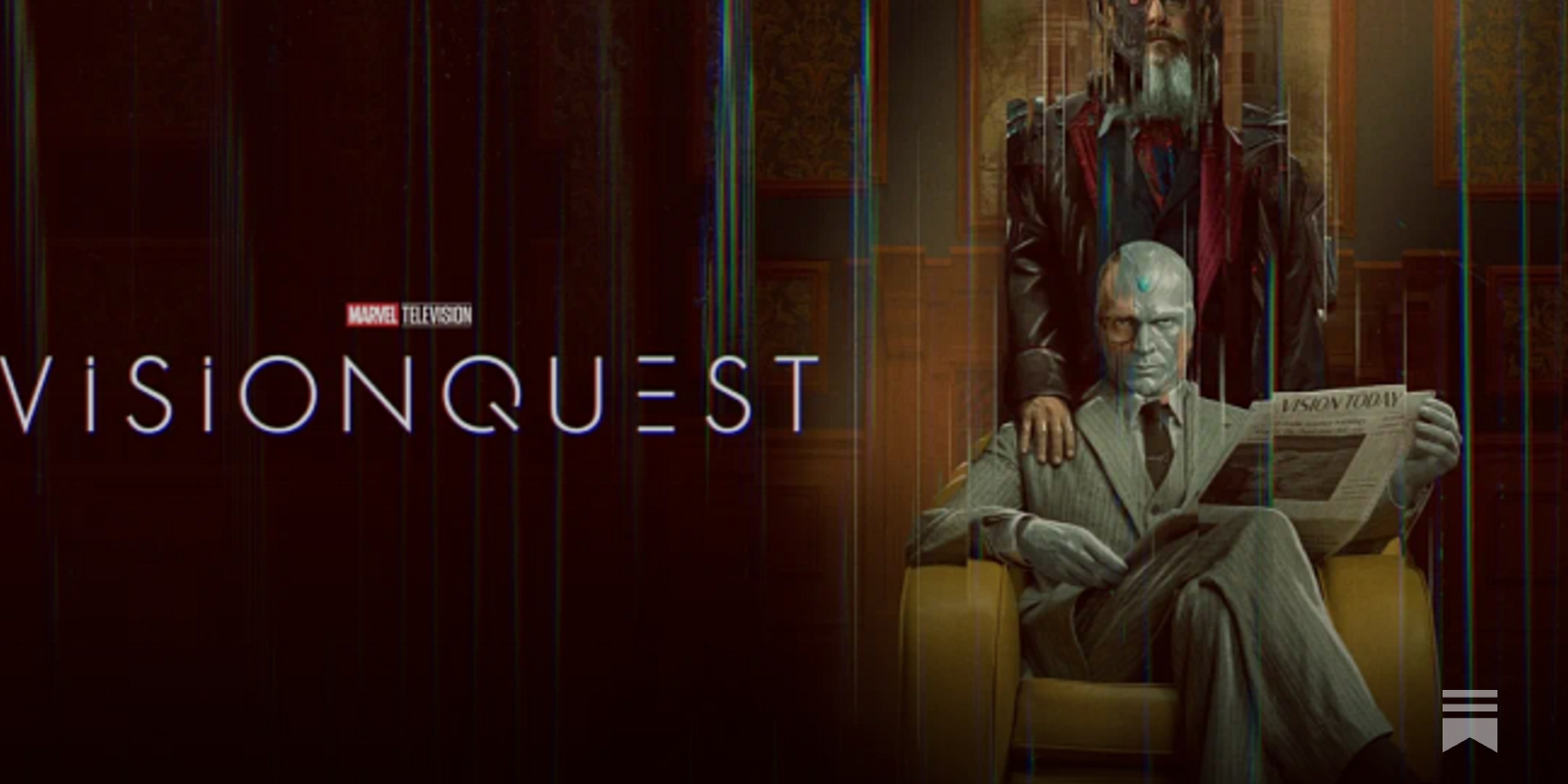 Read More
‘VisionQuest,’ ‘The Diplomat’ and the joy of two very different TV series taking big swings

ByMarvelComicBooks.com
October 16, 2026