
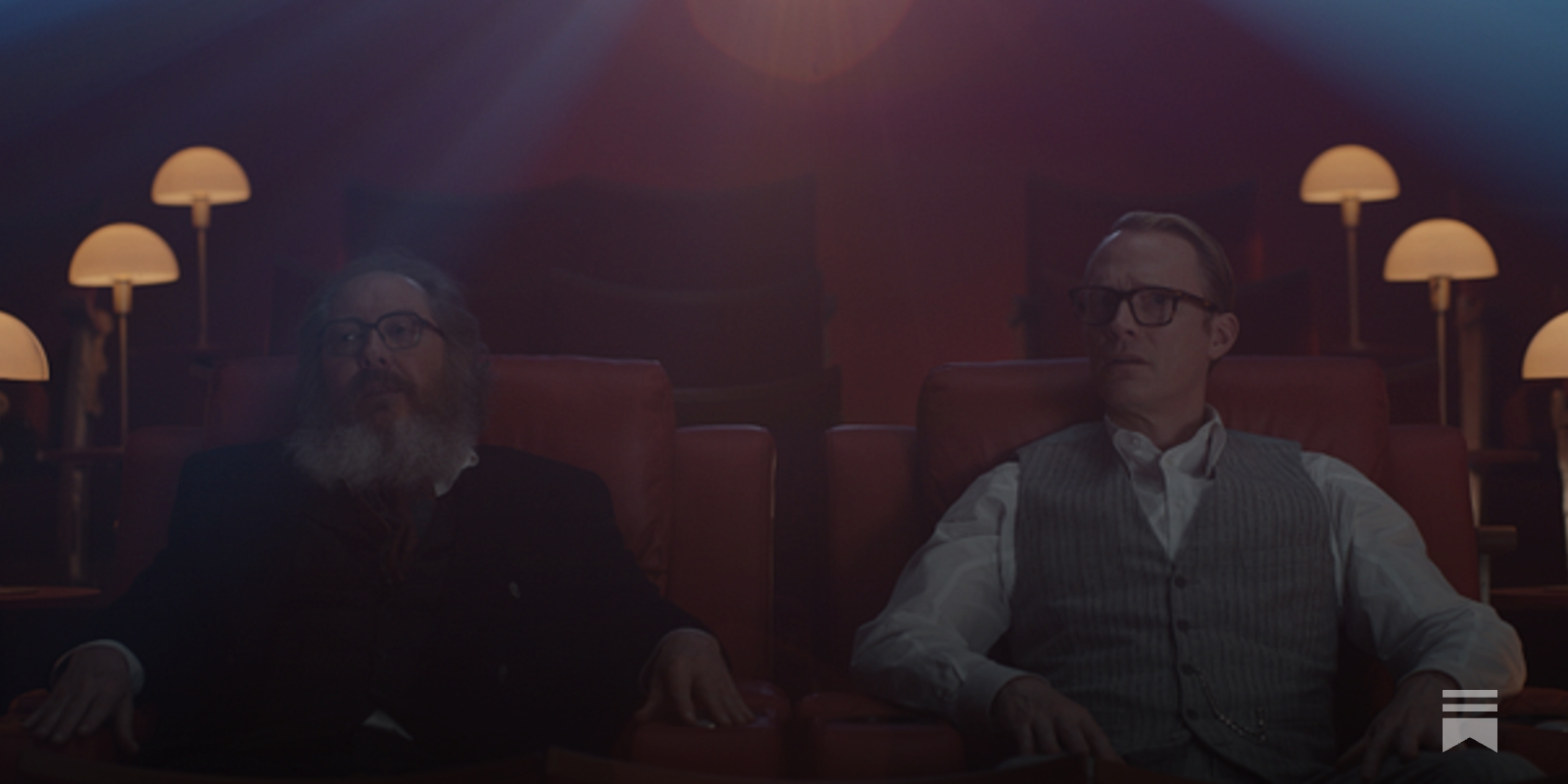
[#item_full_content] [[{“value”:”It’s always been easy to underrate James Spader’s casting as evil robot Ultron in the Marvel Cinematic Universe, since the CG robot body in Avengers: Age of Ultron wasn’t especially expressive, and the movie itself felt like treading water waiting for Thanos, though it has improved substantially in hindsight as a middle chapter. In VisionQuest, he finally gets to shine – it turns out that after incinerating Ultron with his head laser, Vision (Paul Bettany) preserved his code, and New Vision (still Bettany, now that Vision 1.0 was destroyed, and Hallucination Sitcom Vision also faded away) keeps him locked away inside his head, where he mostly appears as just James Spader with a rabbi-sized beard. Fittingly for a robot digitally dolled up to look like a human, he behaves like a bitchy RuPaul’s Drag Race competitor, throwing shade and teasing dubious alliances. Bettany, as usual, is the straight man here, and Spader acts in every way the opposite of that. As the creator of Vision’s body (originally for himself, you may recall), he’s technically the android’s “Dad,” even if he behaves more like the catty gay uncle who was never allowed to visit.
If I could go back in time and tell the world that one day, Marvel would copy Herman’s Head, to much acclaim, I wonder how many people would believe me. Maybe if I told them Pixar would do it first, twice. So anyway, what’s in Vision’s head, what’s in his heeeeeyeeeyyyad, is digital ZOMBIES, zombies, zommmm-bee-HEE-HEE-HEES… basically, every Stark AI we’ve heard about prior except the one in Spider-Man’s suit (maybe Jennifer Connelly had to watch the kids?). So we get EDITH, from Spider-Man’s glasses, along with the original JARVIS, who was originally voiced by Bettany, then revealed to be based on a butler played by James D’Arcy, who is now not just his voice but appearance as well. Add in Orla Brady as FRIDAY, and Jonathan Sayer and Henry Lewis as “U” and “DUM-E,” names designed to induce some sub-”Who’s on First” wordplay. Finally, there’s Ultron; inside Vision’s mind, they all live together in a mansion, with Ultron locked in the attic.
Mortal Cinema is a reader-supported publication. To receive new posts and support my work, consider becoming a free or paid subscriber.
Subscribe
This Vision, is, of course, New Vision, the one with the white body who’s an exact copy of the original. He keeps referring to things the other body did in the third person, until he gradually comes to see that as him too. There’s a reason for that – if you skipped Agatha All Along, let’s just recap the plot point that when WandaVision ended and Wanda’s family disintegrated, we learned that the spirit of Billy, one of her sons, entered the dying body of another Billy, and now is alive with magic powers. The same, we learn, has happened now with Tommy (Ruaridh Mollica), whose comic-book nickname Speed gets a supremely silly new origin, and presumably with Vision too, though he’s in denial about it, despite a robot brain being presumably easier to copy than a human soul.
Terry Matalas is the showrunner, and he’s brought over some friends from Star Trek. There’s Brady, again playing a housekeeper who’s smarter than her role, and Todd Stashwick as Paladin, an assassin for hire who’s suddenly after Vision, even though everyone thinks Vision is dead, while he’s actually spending his days in human form working at a pub in Scotland. When Tommy, who has taken over the body of a habitual thief and con man, starts to figure out who he is now, Vision’s enemies try to use him to draw in his “father.”
Trailers and other articles have basically given away who the mystery antagonist is, though the reveal won’t mean a lot to those who don’t know the comics well. The real meat of the story, though, is the fatherhood through-line, be it between Ultron and Vision, or Vision and Tommy. (Billy doesn’t seem to occur much to Vision until it matters to the plot.)
VisionQuest makes a lot of use of visual metaphors for tech stuff – think the Q episodes of Star Trek: Voyager, wherein a wilderness gas station might represent the Q continuum, or a Q civil war gets depicted as the actual American Civil War. On older TV shows, this was a way to save money; here, the mansion sets used to represent the inner workings of Vision’s head look quite expensive. There is a series of scenes where the show more or less uses an empty stage technique where it’s obvious they found it easier/cheaper than renting the pub set out for more shooting days, and that’s fun in its own way – so many old British sci-fi shows were wonderfully surreal simply because they couldn’t afford to be realistic, and actively choosing that path when it’s unnecessary demonstrates that creativity is not dead.
Thanks for reading Mortal Cinema! This post is public so feel free to share it.
Share
Sometimes, though, the “visual metaphor for cyberspace thing” starts to feel too pandering, as when Vision and Ultron try to hack a law enforcement database, and it’s represented as them dressing up as buddy cops walking into a police station and talking to bots in human form. Wanda’s the one who wanted her life to look like old TV shows – there isn’t really a reason Vision should want to be in True Detective while he hacks, except the assumption that audiences won’t get it otherwise. And maybe it’s fun…ish. Every time I thought the show was getting too far afield, something weird would happen to pull me back in. There’s a semi-retcon regarding the origins of all these AIs that I’m not crazy about, but then they’ll show robot-form Ultron lusting after a similar robo-female, and I’m totally there for the robo-porn implications.
Previous Vision already learned to love; New Vision is back to Mr. Spock mode again, and Bettany has fun playing him basically on the spectrum – great at reasoning, poor at social cues, unclear how to deal with emotions. Ultron, as a manipulative asshole who has a very slim chance of Negan-style redemption, is the perfect foil for him. Both characters are ostensibly heterosexual, and yet their dynamic doesn’t exactly feel like father and son – the way human-form Ultron appears as an avatar nobody else can see recalls Baltar and Number Six on Battlestar Galactica; the way they discuss varying degrees of humanity brings to mind Data and the Borg Queen. One line of dialogue in which Ultron states that he still despise humanity except for artists feels like an applause line aimed at critics, and it works.
And that’s because everything Spader does here works. Cast originally to be an arch-villain in a movie, he gets a lot more to do in eight episodes, and it’s not a simple antihero turn – anti-villain might be more appropriate. Like Jared Leto’s Skeletor, he’s a hoot because he knows he’s the bad guy and revels in his conscious misdeeds. But he’s also kind of a grandpa now – hence the beard, presumably — which stirs something not entirely awful in him.
The rest of the show feels as self-satisfied as Ultron, and I’m not sure it’s earned. But any accolades for the two leads are.
Episodes 1-2 of Marvel Television’s VisionQuest debut on Disney+ on October 14. All images via Marvel TV
Mortal Cinema is a reader-supported publication. To receive new posts and support my work, consider becoming a free or paid subscriber.
Subscribe
Prefer not to subscribe via Substack? You can leave a tip through Buy Me a Coffee instead.
Buy Me a Coffee
You can also do PayPal.
Donate via PayPal
[
Marvel’s Wonder Man Review: Simon Never Says
](https://lytrules.substack.com/p/marvels-wonder-man-review-simon-never)
Luke Y. Thompson
·
Jan 23
One of my friends was very upset about the casting of Wonder Man. It was the usual complaint – color blindness, since Wonder Man in the comics was white.
[
Read full story
](https://lytrules.substack.com/p/marvels-wonder-man-review-simon-never)”}]] 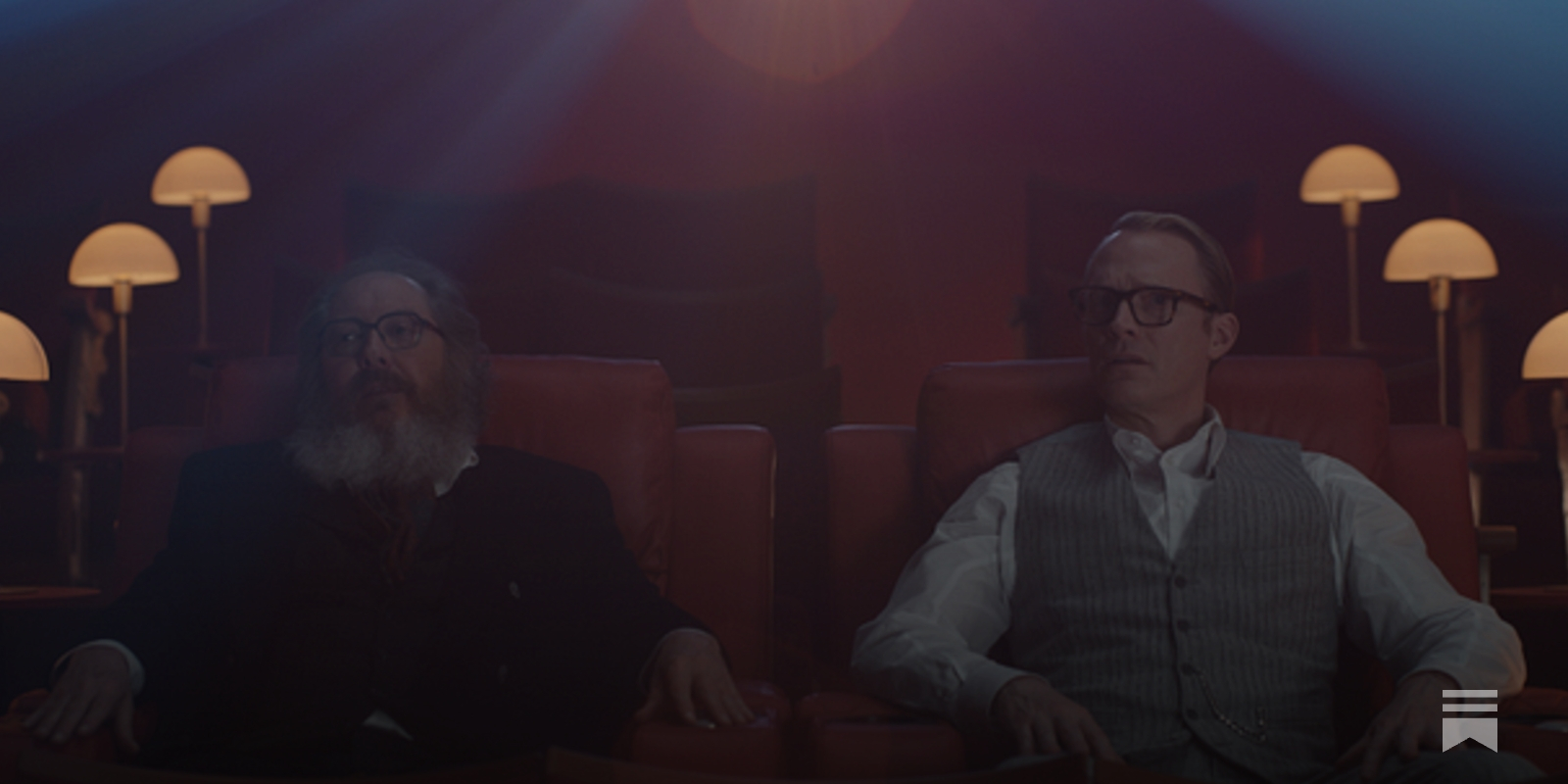 Read More