[#item_full_content] [[{“value”:”Marvel’s Queen in Black #4, written by Al Ewing, has Johnny Storm, the Human Torch, trading flirtatious lines with Nova, and coverage is already treating the exchange as another step in turning one of comics’ best-known ladies’ men bisexual. Marvel has not formally announced a change to Johnny’s orientation, and that is how it works: a wink in one issue, a headline the next, and a readership expected to accept the result as settled. It comes after Iceman, and Fandom Pulse’s view is that writers who find a flirty man with a taste for women uncomfortable are rewriting the characters who fit the description.
Subscribe
What the Issue Shows
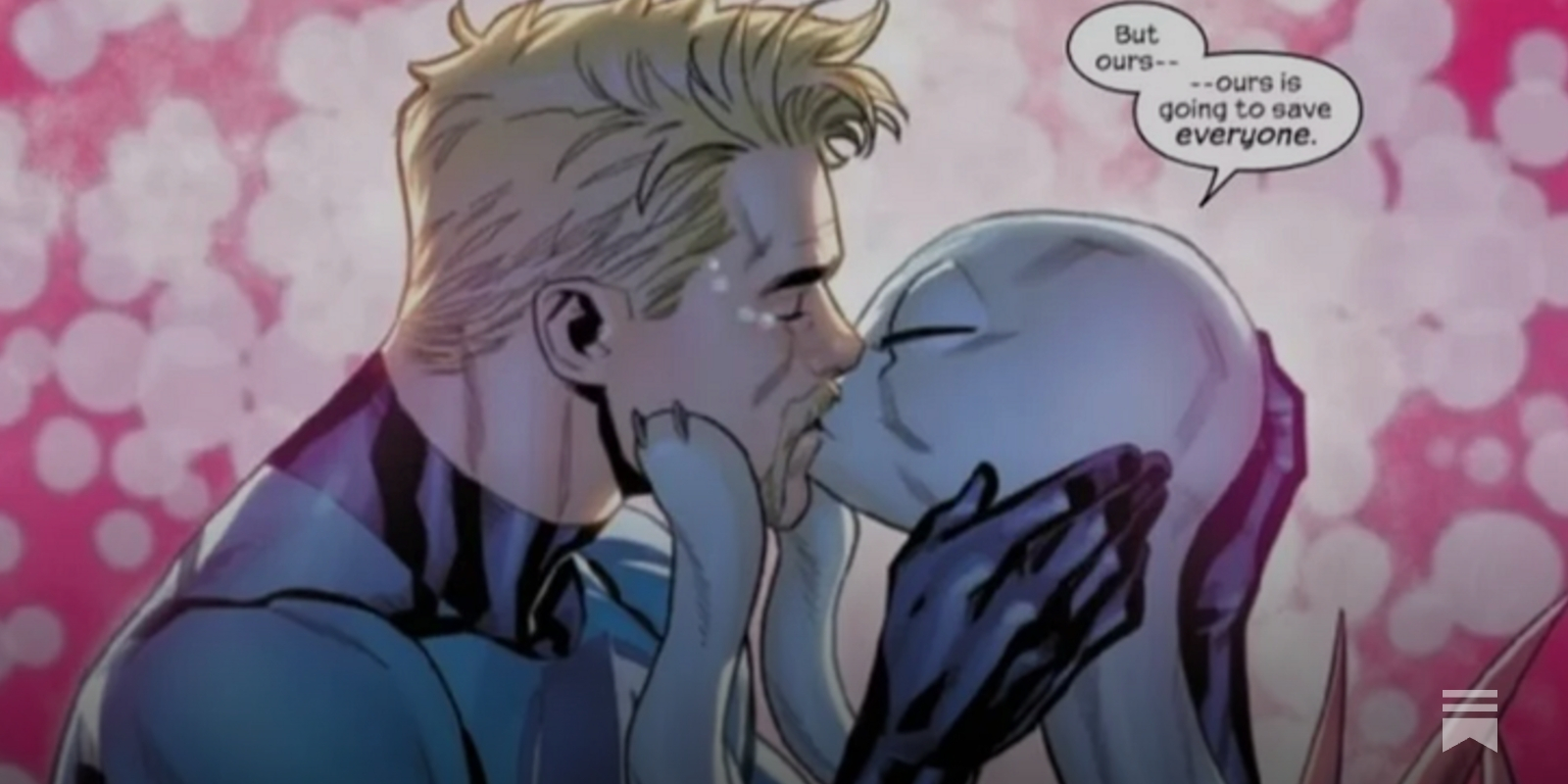
Queen in Black #4 is by Ewing, with art by Iban Coello, Paco Medina and Guru-eFX. In it the Fantastic Four defeat the symbiote Firelord, with Captain R’Gar and the Thing holding him down while Johnny and Nova combine their energy to blast him apart. Before they do, Johnny compliments Nova’s cologne, and Nova promises to buy him a bottle. Nova then says: “I need you as hot as it gets.” Johnny answers: “That’s every day of my life.”
Coverage has run ahead of the comic. One outlet declared it a confirmation that Johnny is interested in men, while the largest write-up of the scene says his orientation is still officially unannounced. The same write-up lists earlier moments read as hints: tension with Daken in Marjorie Liu’s Daken: Dark Wolverine, Johnny’s flirtatious relationship with Peter Parker, his casual admissions of attraction to non-binary alien species, and his text reply to Iceman coming out, “Flame on! Literally!” Fandom Pulse covered the 25th issue of Ryan North’s Fantastic Four run, which showed Johnny with a spiky alien in a scene the piece read as signaling pansexuality.
Johnny Storm Has Always Been the Ladies’ Man
Stan Lee and Jack Kirby introduced Johnny in The Fantastic Four #1 in November 1961 as the youngest member of the team, brash and impetuous next to his sister Sue. His romances run through Crystal, an Inhuman princess he dated in college, Frankie Raye, who left him to become Galactus’s herald, Namorita, Medusa and Rogue. He married Lyja, a Skrull spy who had disguised herself as Alicia Masters, and the marriage ended on bad terms when her deception came out. The same coverage describes him as the superhero community’s ultimate flamboyant playboy and womanizer, chasing fast cars and fleeting romances.
The screen versions followed that template. Chris Evans played him in 2005 and 2007 and returned in Deadpool & Wolverine in 2024, and his version is remembered as a charming, slightly sleazy hothead. Joseph Quinn took over in The Fantastic Four: First Steps in 2025. Ahead of its release he said in an interview that he wanted Johnny to move away from the old-school ladies’ man and skip the cheesy pickup lines.
The Iceman Playbook
They’ve done this before with Iceman. Bobby Drake spent decades as a founding X-Man written around girlfriends and jokes, and in 2015’s All-New X-Men #40, written by Brian Michael Bendis, the time-displaced teenage Bobby was told by Jean Grey that he is gay. The adult Iceman was confirmed gay soon after, and Marvel gave him a solo series. A change like that is permanent in a way a death or a marriage is not, because it cannot be undone without an editorial about retconning a gay character.
Star-Lord followed. Another charming rogue, he was written bisexual and polyamorous in Guardians of the Galaxy #9, and the coverage notes he was returned to his default state in later appearances. Johnny is the third in the line, and his rollout uses a method that deniability makes easy: hints and flirtation in small moments, with the confirmation left for a headline writer or a later issue. The writers get the headlines without announcing the change, and the readers who liked the character as written are told they are imagining it.
A Move That Does Not Play With Readers
The argument against the move is not about one scene. Flirtatious men who like women are a staple of superhero comics, and Johnny, Bobby and Peter Quill each carried one of the genre’s classic dynamics: the cocky younger brother, the class clown, the space rogue. Changing the orientation of each one in turn removes that dynamic from the page, and the pattern reads as writers who regard a ladies’ man as a problem to be corrected, not a character to be written well. Quinn’s remark that he wanted to retire the old-school ladies’ man points the same way, from the film side. The question for Marvel is the one it keeps declining to answer: who is asking for this, and who is paying for it?
If Iceman, Star-Lord and now Johnny Storm each lost the flirtatious ladies’ man at the center of the character, which classic Marvel rogue is next, and will any reader who wanted the original Johnny Storm be left a comic to buy?
Subscribe
Sign up for the Ayla Rin: Gateway to Doom Crowdfund, coming soon for great cosmic comic books with a cover by legendary Green Lantern artist, Ethan Van Sciver:”}]] 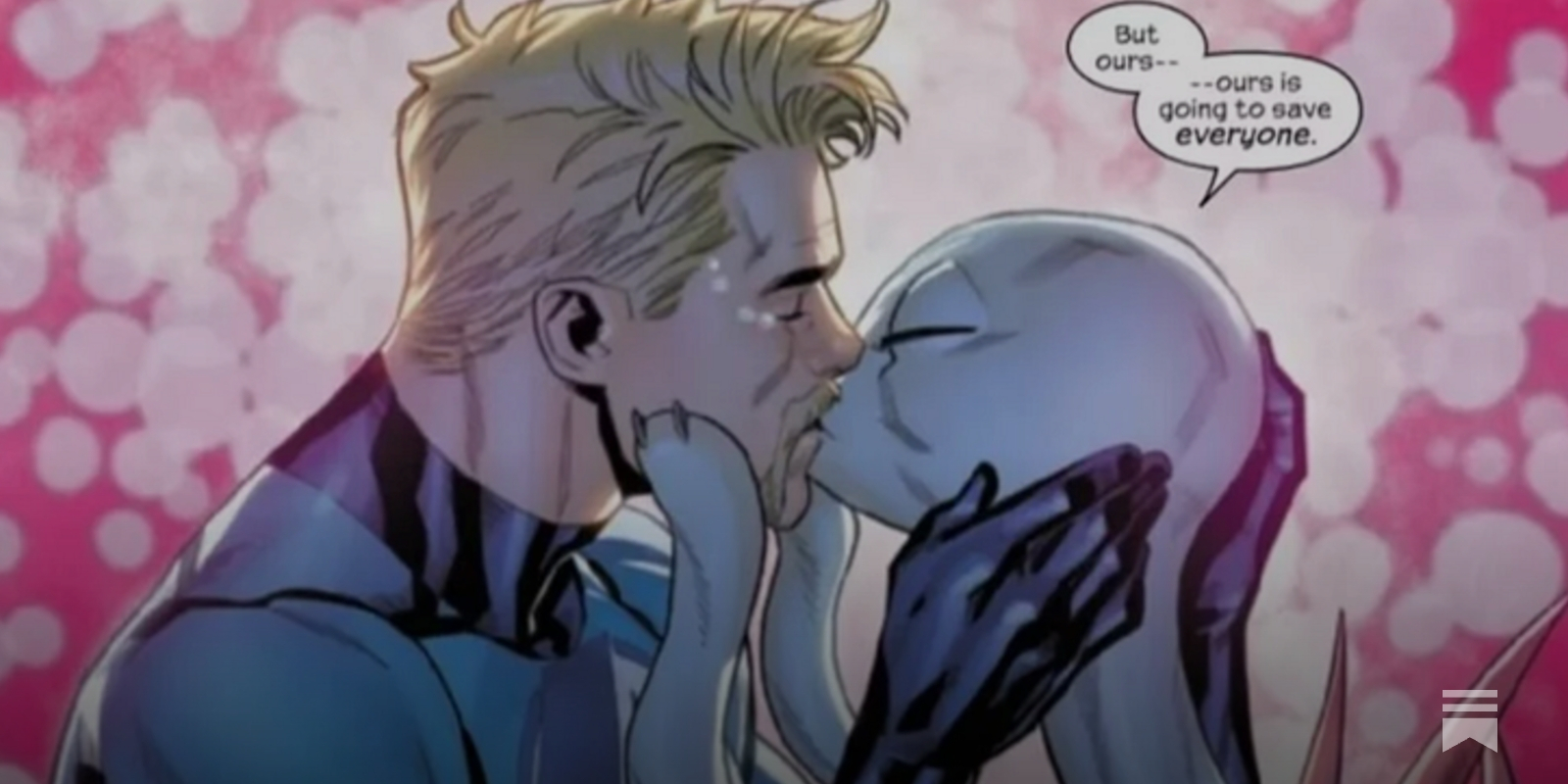 Read More
Marvel Has Johnny Storm Flirting With Nova in Queen in Black #4 as Another Classic Ladies’ Man Is Rewritten As Bi After Iceman

ByMarvelComicBooks.com
October 15, 2026